
Inside Cyclocross #73 - Post Worlds Racing
The World Championships are over, but racing isn't. How long does post-words racing remain viable? We also have an overview of the 2026-27 cyclocross calendar, and a feature on Guerciotti.

This week’s edition of Inside Cyclocross focusses on the aftermath of the world championships. Racing is still underway, but attention is slipping. How long do the race organizers in this phase of the season survive?
We also have an overview of the 2026-2027 cyclocross calendar for the big series, and an article on Alessandro Guerciotti, who is very critical about the Italian federation.
Away from the spotlight, does post-World Championship racing still have a future?
With the World Championships a week behind us, the cyclocross season is nearing its end. Riders, media, and fans are turning their attention to the road, but there is still racing. After Maldegem, Middelkerke, and Lille, there are still three more races on the calendar. While the racing in Middelkerke especially wasn’t bad, the question is how long it remains viable to organize cyclocross races after the World Championships.
Opinion-based analysis by Noah van Putten
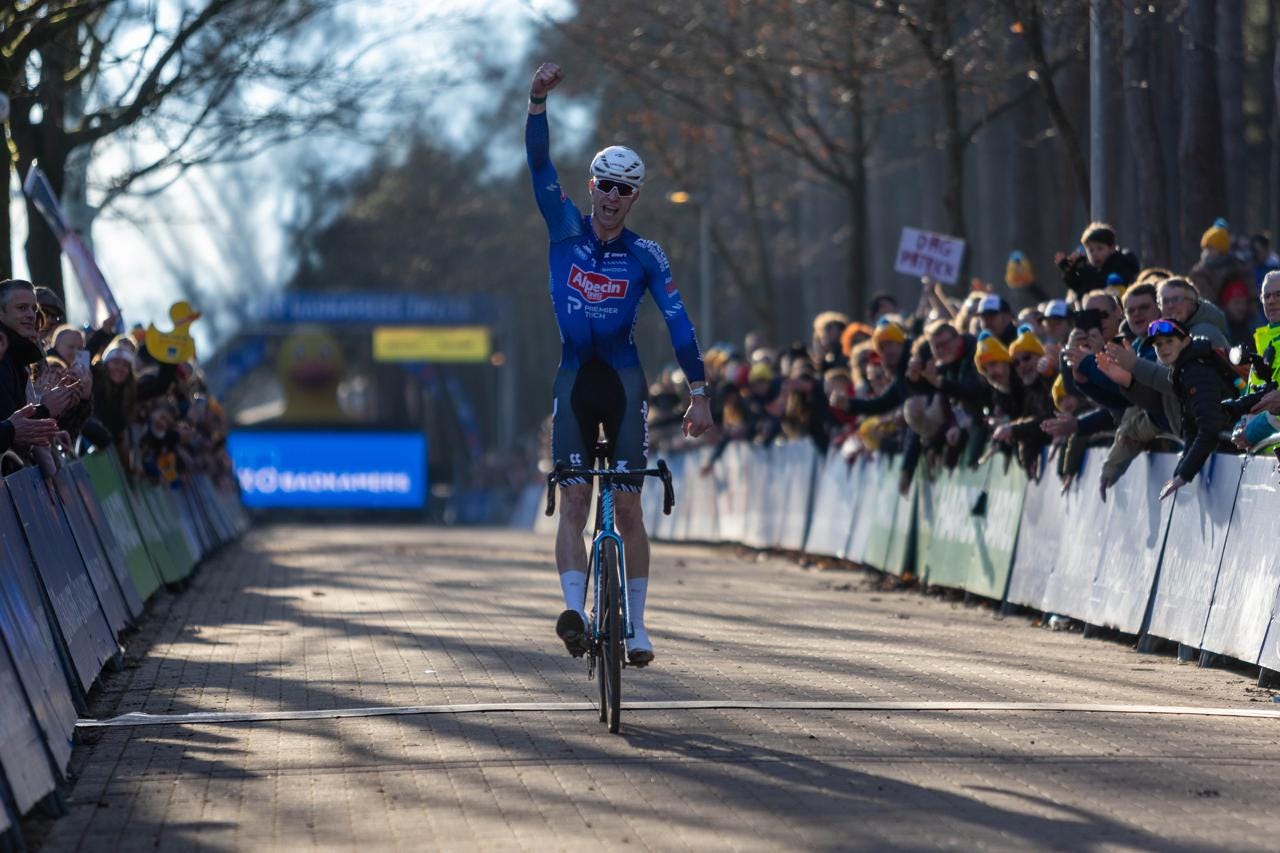
Niels Vandeputte won in Lille - YefriFotos
Last Saturday, the Superprestige came to a close with a phenomenal final women’s race in Middelkerke. Amandine Fouquenet started the race seven points down in the overall, a near enough impossible deficit to overcome. She had to win, with Aniek van Alphen placing ninth or lower. The race turned into a great duel for the overall, one that didn’t pass without controversy.
At the front of the race, Fouquenet broke clear early. However, Ceylin Alvarado came agonizingly close to closing the gap twice: first in the middle of the race, and then again in the final lap. Alvarado was stronger through the first sandpit and steep runup, but the French rider had the upper hand on the power sections. Despite Alvarado’s best attempts, Fouquenet held hope of winning the overall by fending off the Dutch champion on both charges.
Where Fouquenet did what she had to do, Van Alphen struggled. After a good start, she plummeted down the rankings. She fell to eighth, just about holding on to the virtual lead. Then Bentveld passed her, and a lap later Worst did as well.
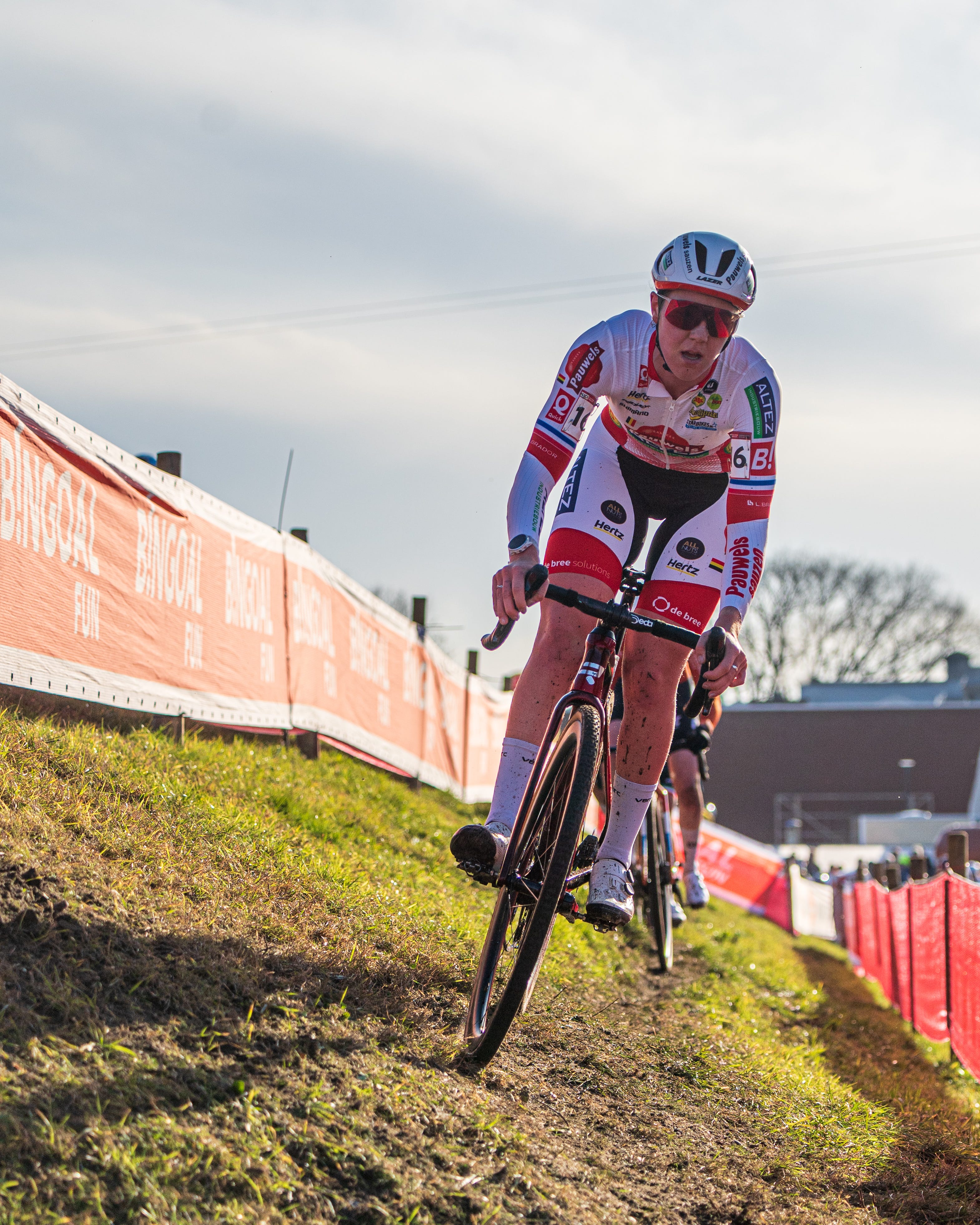
Fouquenet in Maasmechelen - BeyondHorizonMedia
It seemed over for Van Alphen, but she was thrown a lifeline by Worst in the final lap. Her Seven Racing teammate waited for her and brought her back to Leonie Bentveld for eighth place. If she could beat the U23 World Champion, she would win the overall.
As Fouquenet drank a can of soda after the finish line, she seemed to have won the Superprestige. Van Alphen was dropped by Bentveld, but then her friend Inge van der Heijden waited and let her pass in the final stages of the race. Van Alphen was handed eighth and the win in the overall.
Under normal circumstances, such a climax to the Superprestige would have made headlines. Van der Heijden, racing for a different team but managed by the same owner, gifted the Superprestige to a friend. A great story in a way, but perhaps also against the sporting spirit and UCI rulebook.
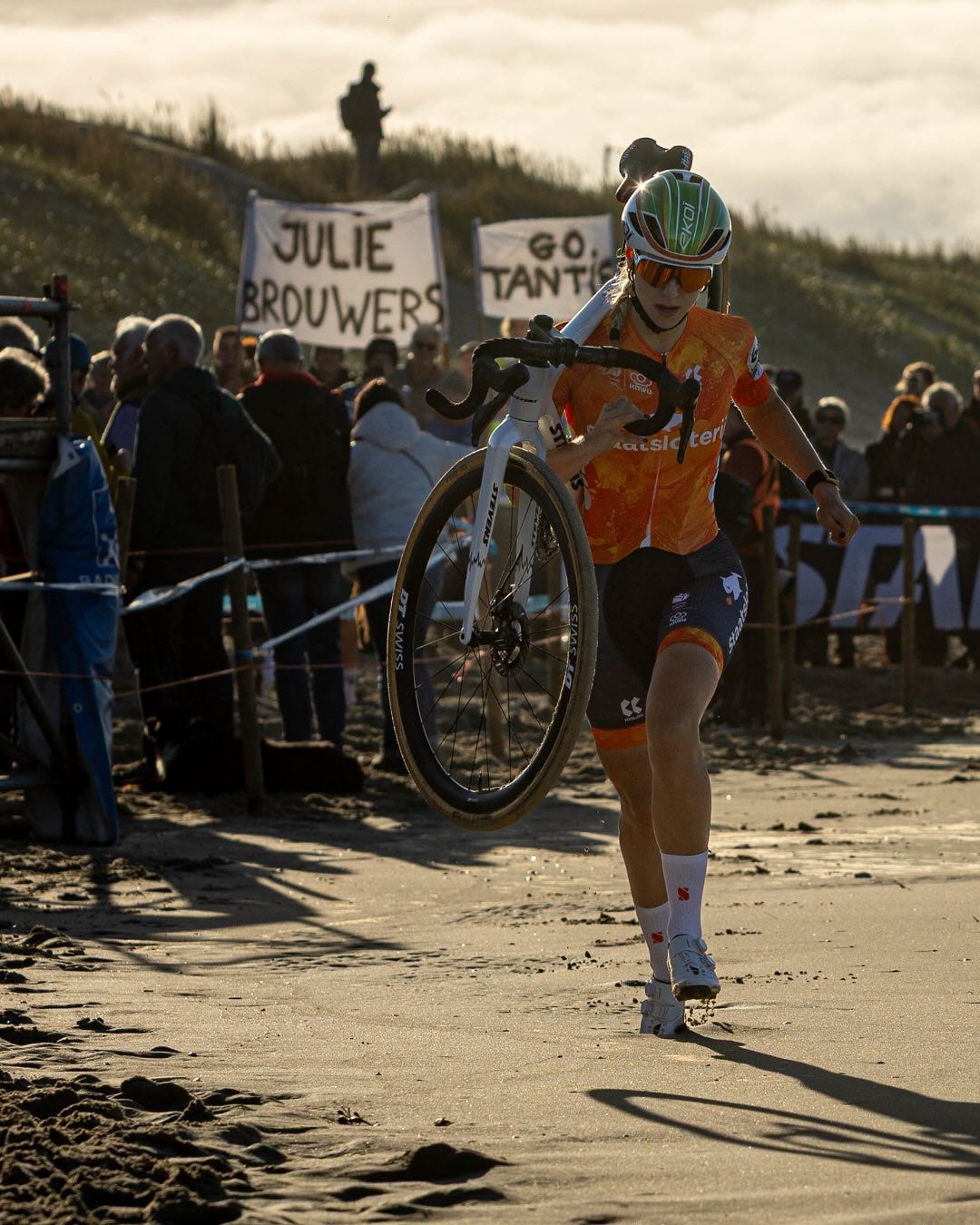
Inge van der Heijden at the European Championships - YefriFotos
Now, for a variety of reasons, this climax didn’t get that much attention. First, women’s racing still gets less attention than men’s racing. This race was also behind a paywall in Belgium. The viewing experience for the English-speaking viewers was further hampered as the commentators were under the impression that Fouquenet won. No virtual standings were shown, and the commentators assumed the number of wins was the tiebreaker, while the actual tiebreaker was the number of starts.
We can have a long discussion on whether that’s a good tiebreaker (this author doesn’t think so), or if cyclocross needs more graphics on screen to aid commentators and bring storylines alive (this author would argue yes). However, the main reason for the lackluster attention is that cyclocross after the World Championships has been slowly quieting out over the last few years.
Until a decade ago, marquee cyclocross riders still raced after the World Championships. In their younger years, Mathieu van der Poel and Wout van Aert chased the win in the Superprestige and Bpost Trophy (now X2O), like Bart Wellens, Sven Nys, and Niels Albert had done before. Now the stars of the sport are already focusing on the road season.
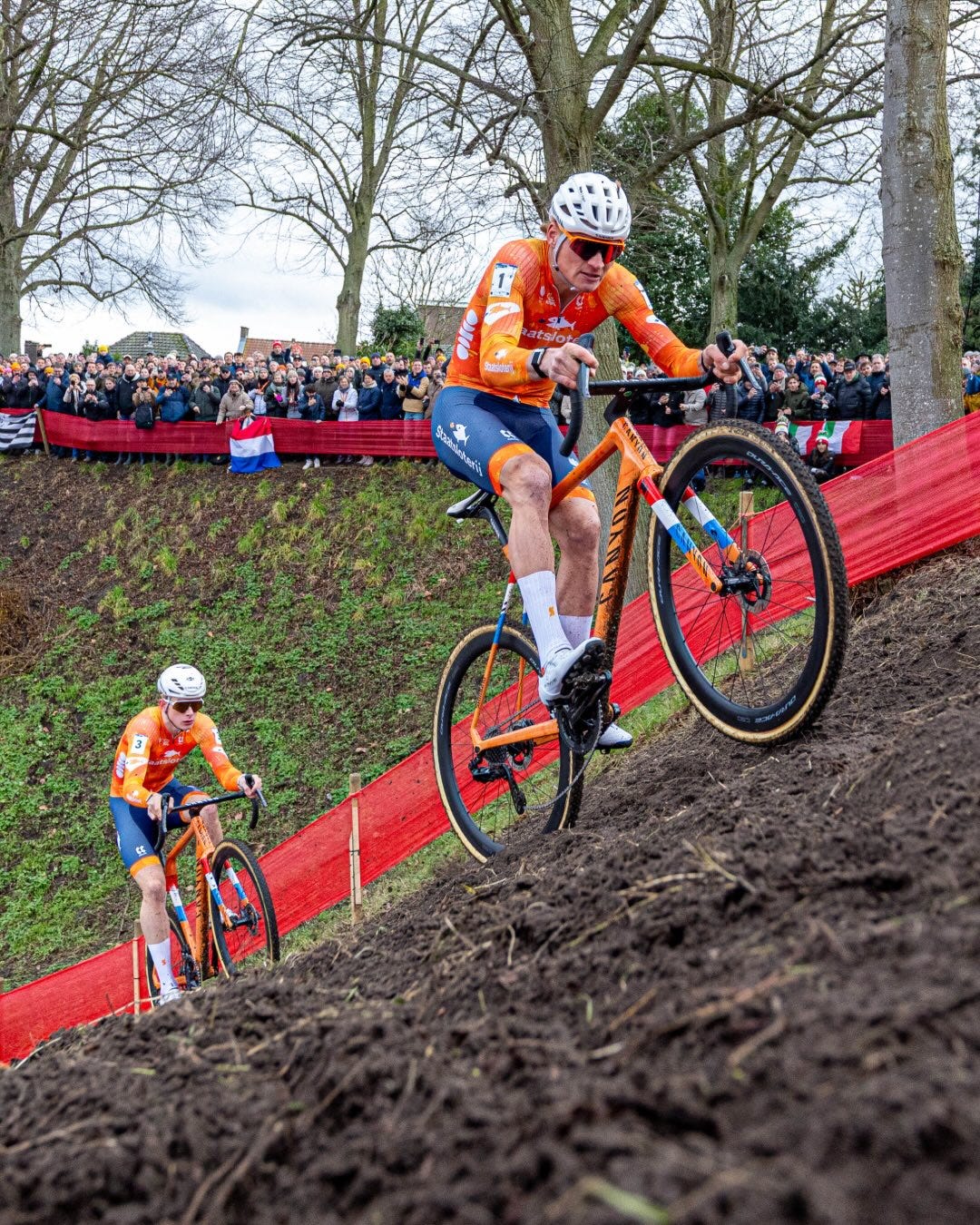
Mathieu van der Poel has ended his season - YefriFotos
That the increase of multidisciplinary riders has changed the sport won’t come as a surprise to any of our readers. It’s defined the cyclocross calendar and created the increased focus on the December period by race organizers. It’s also thinned out the start of the season in terms of races and the quality of the start field.
However, the early season races have a totally different vibe to them. They are building up to something; the field gets a bit stronger every week. With the Superprestige overall becoming less important, and the X2O Trophy almost irrelevant due to the reformed calendar and World Cup, the story of the season has been written after the World Championships. There is nothing to work towards, the results mean more for morale than anything else, and the field gets weaker each weekend.
It’s not just Van der Poel and Puck Pieterse who are already focusing on the road; Zoe Bäckstedt is already in the UAE Tour. U23 World Champion Aaron Dockx is training. Toon Aerts raced his final weekend, focusing on his first season in the WorldTour. Lucinda Brand will do one more weekend before preparing for the Strade Bianche. The list goes on and on, especially outside of Belgium and the Netherlands, where domestic seasons concluded with the national championships over a month ago.
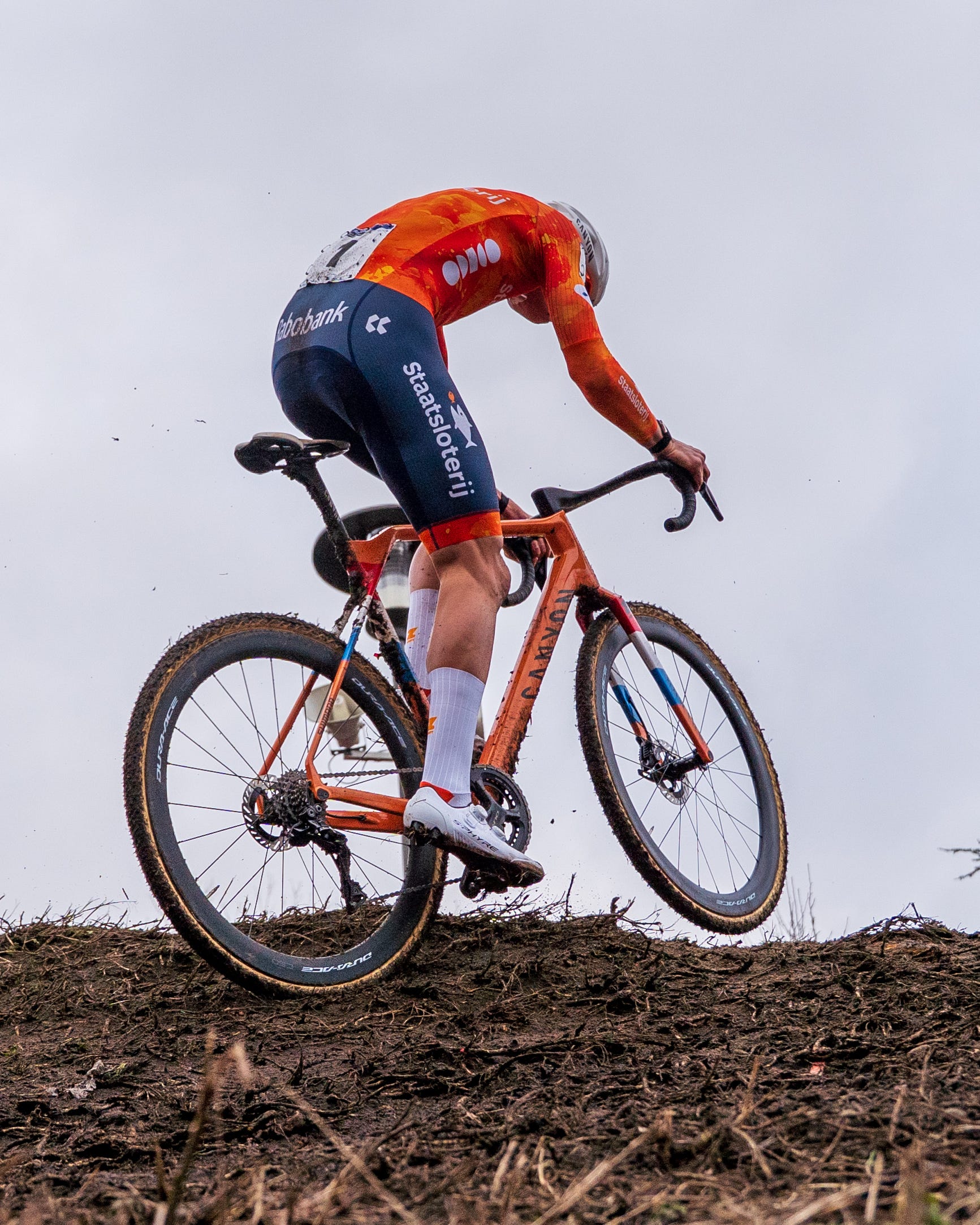
Many top riders are getting ready for road racing - BeyondHorizonMedia
The post-Worlds races serve a purpose. They provide full-time cyclocross riders with a livelihood and are still watched by over 300,000 people on Belgian TV. Like Niels Vandeputte said after a great win in Lille, he can only do his best and beat the riders who are there. Still, his dominant performance was mostly out of the spotlight.
That raises the question: how viable are the races after the World Championships? The organizers in Middelkerke already sounded the alarm bells last year and did so again this year. They saw spectator numbers drop from 20,000 in 2006 to fewer than 6,000 in 2026. To avoid making a loss, they are moving to a mid-week November date next season in the hope of drawing a stronger field and more spectators.
The organizers in Lille told Het Nieuwsblad that they wonder how long it makes sense to continue organizing their race. Breaking even is a struggle, as they drew just 3,000 spectators this year, in contrast to 10,000 some 10 years ago. Only the organizers of Oostmalle, the final race of the season, are content with how things are going. They operate a smaller budget and a relatively small, non-classified event.
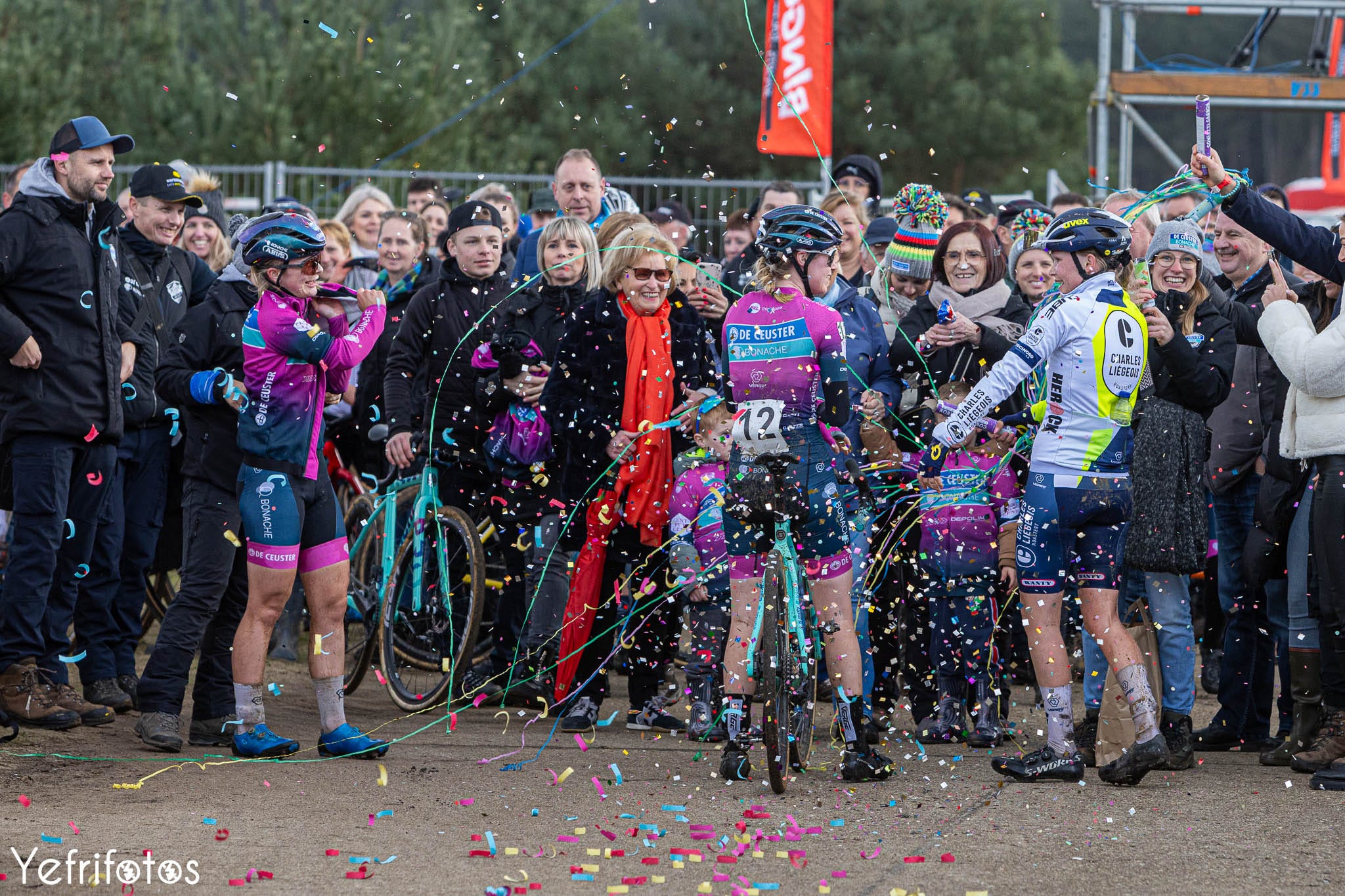
Oostmalle is always a lowkey ending to the season - YefriFotos
The struggle of these organizers highlights the struggle of organizing races after the World Championships in a time where more and more riders combine cross with road. However, it also comes at an interesting moment. Snow-based Winter Olympic sports want to allow cyclocross into the Olympics if the UCI refrains from claiming IOC money in 2030, as first reported by Het Nieuwsblad.
If cyclocross becomes an Olympic sport, it needs to carve out a real identity for itself, one that’s based on its own strength with full-time stars. Sports like biathlon go on until March. Cyclocross starts much earlier and doesn’t need to copy other sports, but will need to find its own space on the calendar between the other cycling sports.
Big Series Announces 2026-2027 Calendar
The four biggest cyclocross series (the World Cup, Superprestige, X2O Trophy, and Exact Cross) have announced their schedules for the upcoming winter. All series have seen significant changes to their schedules, which will be discussed in this overview. We will cover the international calendar in a later article when more races are confirmed.
Analysis by Noah van Putten
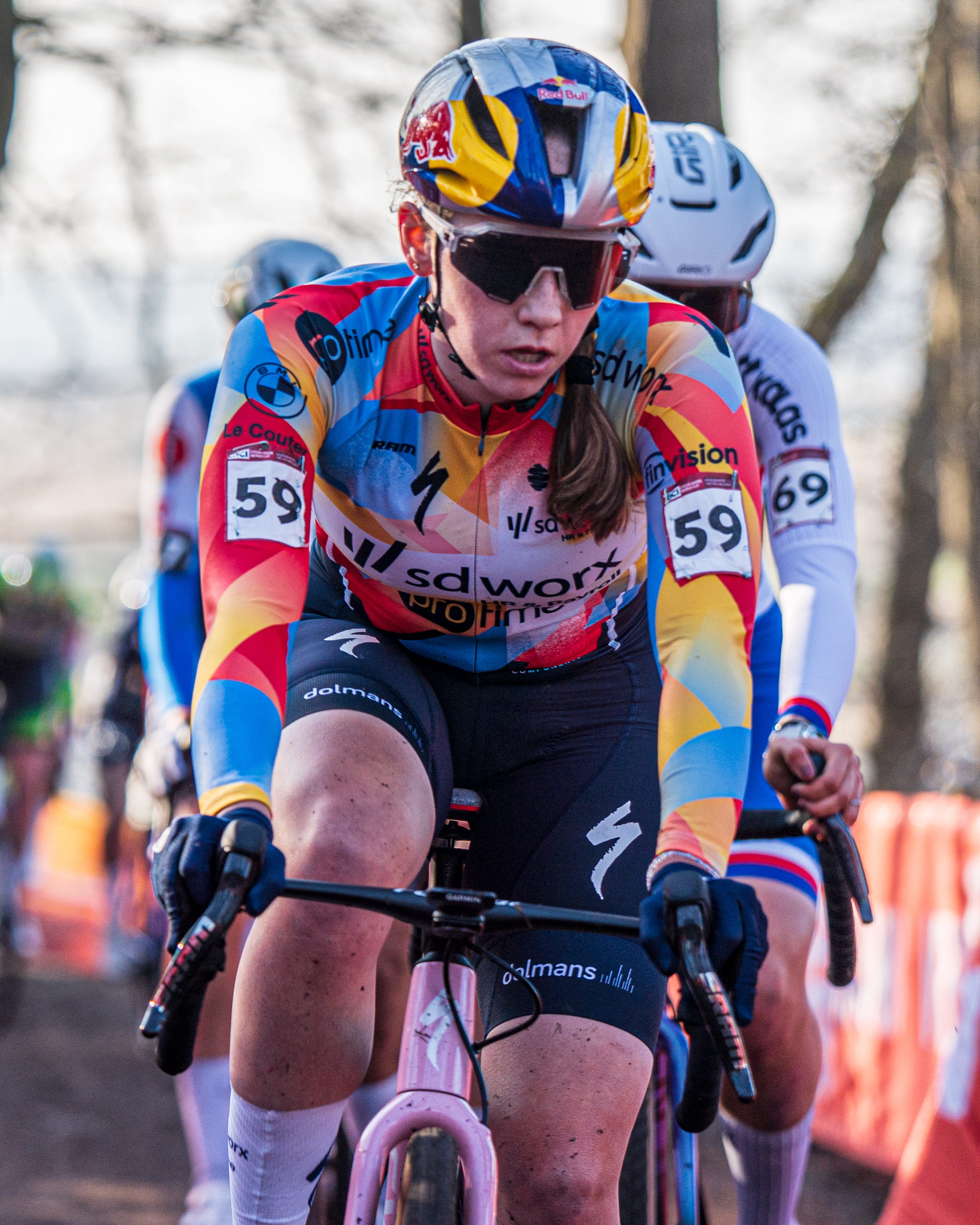
Blanka vas in Hoogerheide - BeyondHorizonMedia
World Cup
Just like this winter, the Cyclocross World Cup will commence in the Czech Republic. As we reported earlier, Ostrava will host the opening round on Friday night. This round comes as the next step of support HSF System offers cyclocross in the Czech Republic. The headquarters of the construction company are located in Ostrava, and they have revitalized the race in the country’s third-largest city in recent years.
HSF works closely with the organizers in Tabor, not just to run the national series, but now also to organize the opening weekend of the World Cup. Two days after Ostrava, the series heads 300km west for the second round in Tabor. This race marks the first double Czech World Cup since 2012 (Pilsen-Tabor) and will be the opening round for the youth World Cup.
New for next winter is an empty weekend in the World Cup; after the double opening weekend, there is no World Cup scheduled. This should allow riders to rest and train without skipping World Cup races. Flanders Classics CEO Tomas van den Spiegel was reluctant about this idea in the past, claiming other races would take this date. Another race did indeed take this date, but interestingly that race is Ruddervoorde, in the Flanders Classics sanctioned Superprestige.
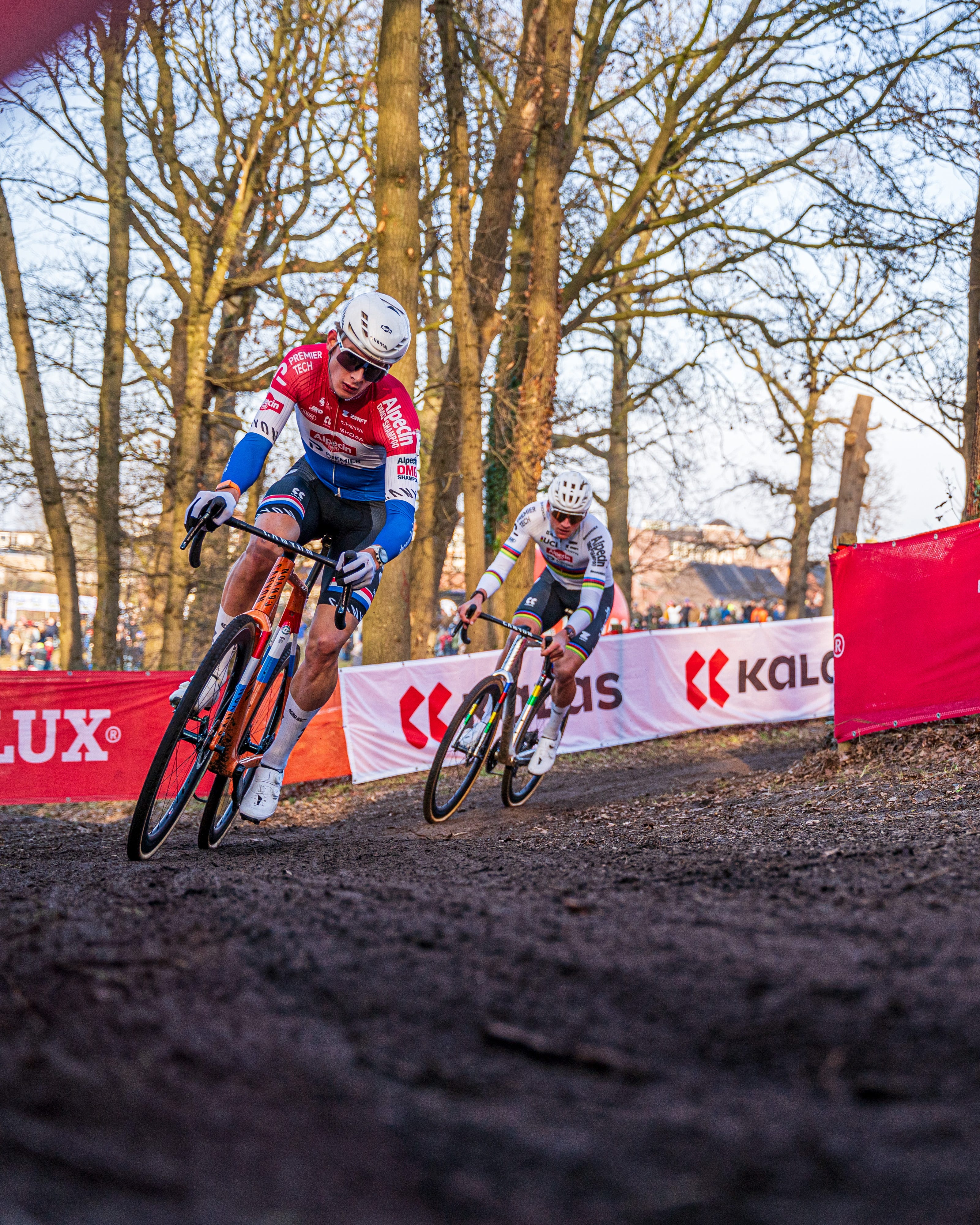
Mathieu van der Poel won the World Cup this year - BeyondHorizonMedia
Hulst was offered this date but declined as they wanted to remain in the Christmas period, and ultimately thought they couldn’t secure the budget this closely after organizing the World Championships.
Another interesting contradiction is that despite the claim of there being more bids than ever for the World Cup, the third round is yet to be assigned. This round will take place outside of the Benelux, with Sporza commentator Ruben van Gucht sharing the rumor that this race would take place in Spain to accommodate riders training around Calpe at that time of the season.
While there are no reports in the Spanish press, there are a few potential options nearby. First, there used to be a UCI race in Valencia. This would fit within the strategy of Flanders Classics to focus on city marketing with their races, and the province of Valencia has shown a willingness to invest in cycling events. However, the Valencia UCI has been cancelled for the last two years. Finding a good location in the city could also be difficult, as most of the green space is crammed into a narrow stretch along the river, offering limited possibilities to make a World Cup-worthy course.
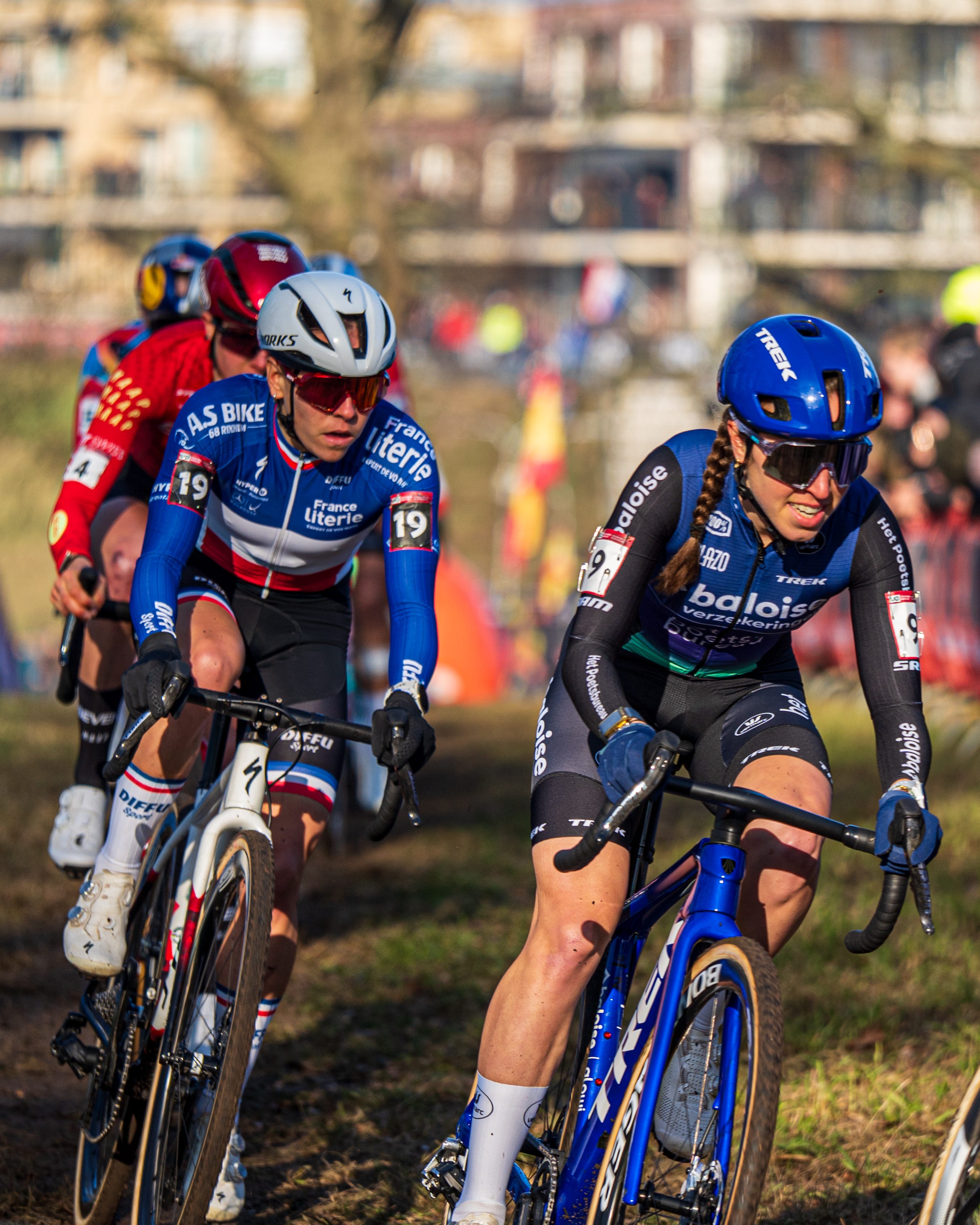
Celia Gery in Hoogerheide - BeyondHorizonMedia
Closer to Calpe, there are two other existing races already organized on the World Cup weekend. Cocentaina is in the same province as Benidorm, and therefore funding could be a concern. The course itself is fast, bumpy, and dusty. From the existing races, Xàtiva would make the most sense. It’s in the Valencia region and has hosted the Spanish championships before. The course runs around a sports complex and is somewhat technical. Of course, a totally new location isn’t off the table for Flanders Classics, and there is no guarantee that this round will be in Spain. Wielerflits reported that Italy and Great Britain are also in contention for this date.
After the potential Spanish round, the World Cup “Christmas Blitz” starts with a familiar double weekend: Antwerp-Koksijde. Directly after Christmas, there is a triple-header. Gavere on Boxing Day and Namur the day after form an incredibly tough duo, as both courses have significant climbing. Following a travel day, the World Cup hits Besançon, France, for the last round of 2026. The Christmas period ends with Zonhoven on the 3rd of January.
Following Nationals weekend and the Benidorm World Cup, the series concludes with another double-header. The round in Maasmechelen is replaced by Hamme, while Hoogerheide remains as the final round of the series. The World Championships take place on the beach of Ostend a week later.
Currently, there are five rounds scheduled for Juniors and U23s: Tabor, Koksijde, Besançon, Benidorm, and Hoogerheide. This would mean all riders would drop one result rather than two. It is, of course, still a possibility that another round gets added. This schedule typically gets confirmed in March.
Superprestige
The Superprestige is undergoing significant changes for the upcoming season. The series starts a week later, with Overijse now hosting the opening round on the 25th of October.
Middelkerke, traditionally held after the World Championships, has now moved to the 5th of November. The race will take place under floodlights on Thursday night during the autumn break in Belgium. The course will be decorated with a Halloween theme.
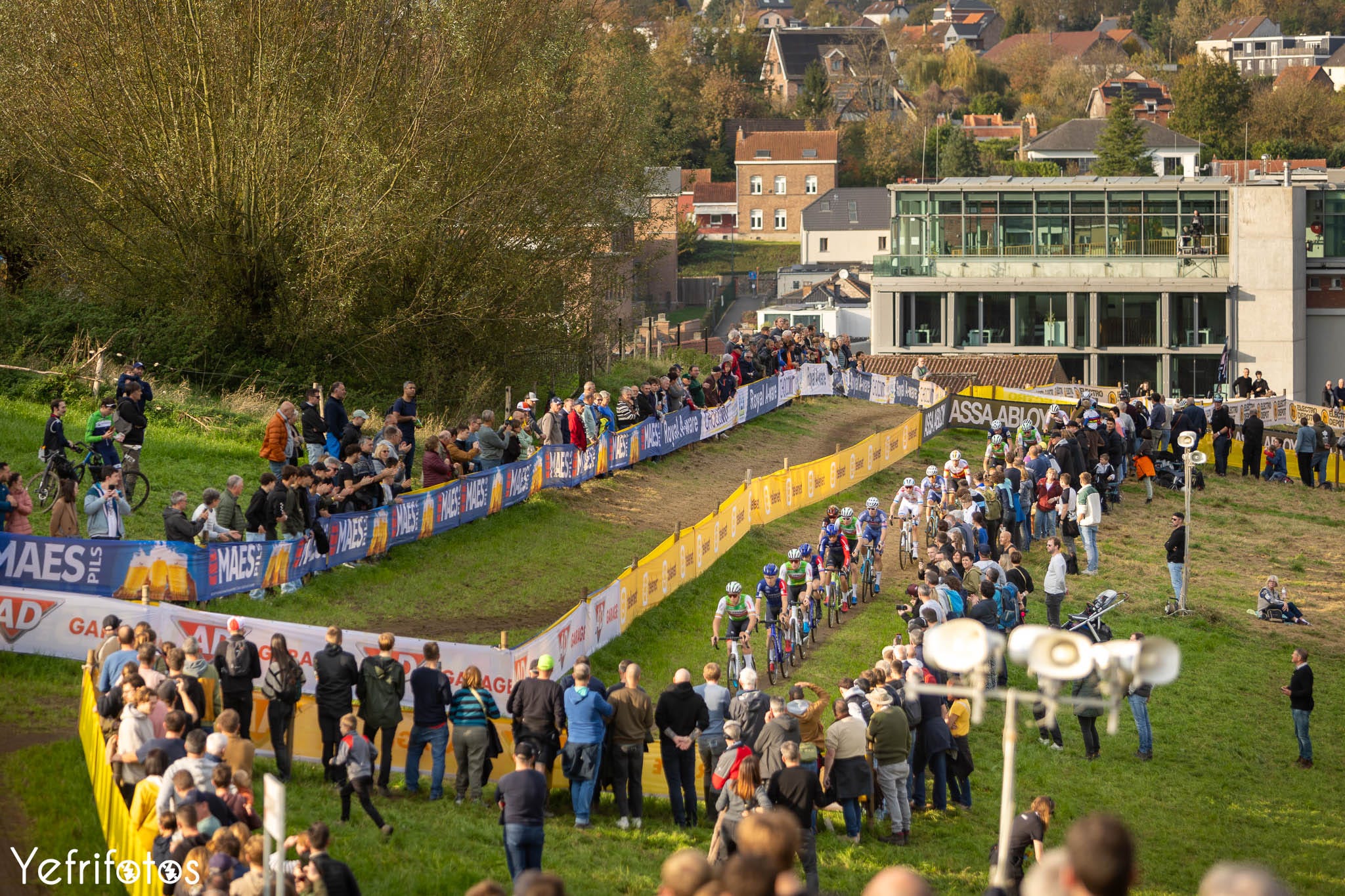
Overijse opens the Superprestige - YefriFotos
This move comes due to two concerns. First, the organizers indicated the budget and logistical support for the event would be difficult on their February date. The World Championships are taking place barely 10km further along the coast in Ostend. Secondly, spectator numbers had been dwindling after the World Championships. A new date, with a theme to attract families with children, aims to change this. Two days later, the European Championships take place in Zeddam, Netherlands.
A few days later, the Superprestige returns with another midweek race, this time in Niel on Armistice Day. Merksplas hosts the fourth round on November 14th. Ruddervoorde has moved to the 6th of December in an attempt to draw more spectators to their event. It could make the race muddier as well, after several fast editions in the early season.
The final three rounds of the Superprestige take place over Christmas, meaning the series now concludes before the World Championships for the first time this century. Heusden-Zolder brings racing on Christmas Day, followed by Diegem on the 30th of December. Gullegem hosts the final round on the 2nd of January.
X2O Trophy
The yellow ducks will traditionally return to the screens on the 1st of November, with the Koppenbergcross opening the series. Two weeks later, Hamme-Zogge returns to the cyclocross calendar, with Jurgen Mettepenningen bringing the iconic event back to life. It’s interesting that Hamme (25,000 inhabitants) will organize two big cyclocross races in a single season.
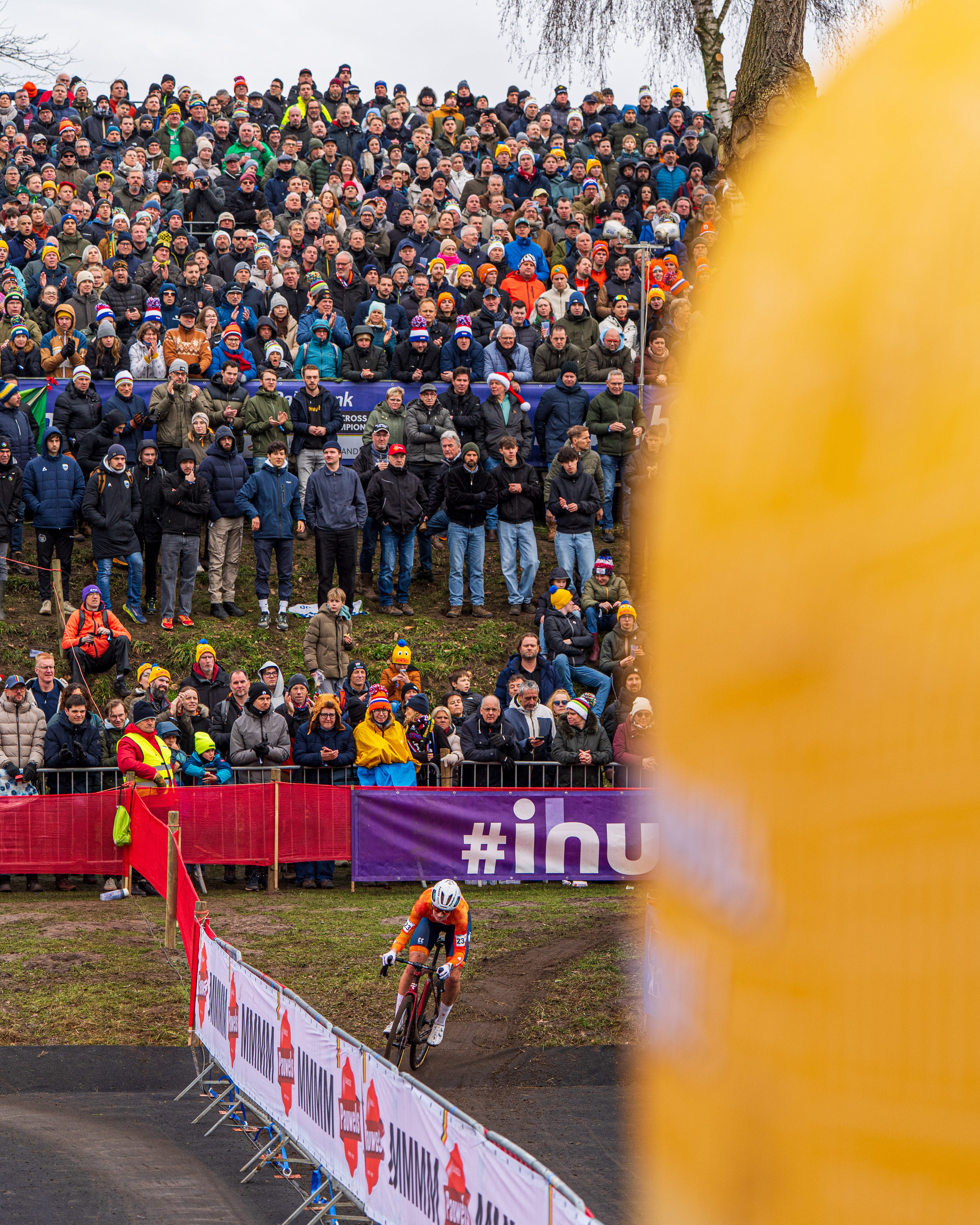
The X2O Duck look at the riders - BeyondHorizonMedia
The third round of the series takes place in Beringen. Terhills organized the Belgian championships this season and now moves to a more prominent date in December, swapping the Exact Cross for the X2O Trophy.
The rest of the series remains unchanged, with Hofstade, Loenhout, Baal, Lille, and Brussels closing the series. For Loenhout, the new date on the 23rd will be interesting, as the race has typically drawn large party crowds between Christmas and New Year’s. Hamme (World Cup) and Lokeren (Exact Cross) have been dropped from this series.
Exact Cross
The Exact Cross series continues to fill gaps on the calendar and provide important opportunities for full-time cyclocross riders. Dendermonde drops out of the World Cup and will now host the opening race of the Belgian season on the 11th of October. Meulebeke takes place a week later.
Heerde is retained for the third straight year, as the Dutch sand course pairs with the Superprestige in Overijse for the first double-header of the Belgian season in the final weekend of October. It marks a continuation of the trend that the Belgian season gets underway later and later. In several other countries, the domestic seasons are more than halfway done at this point.
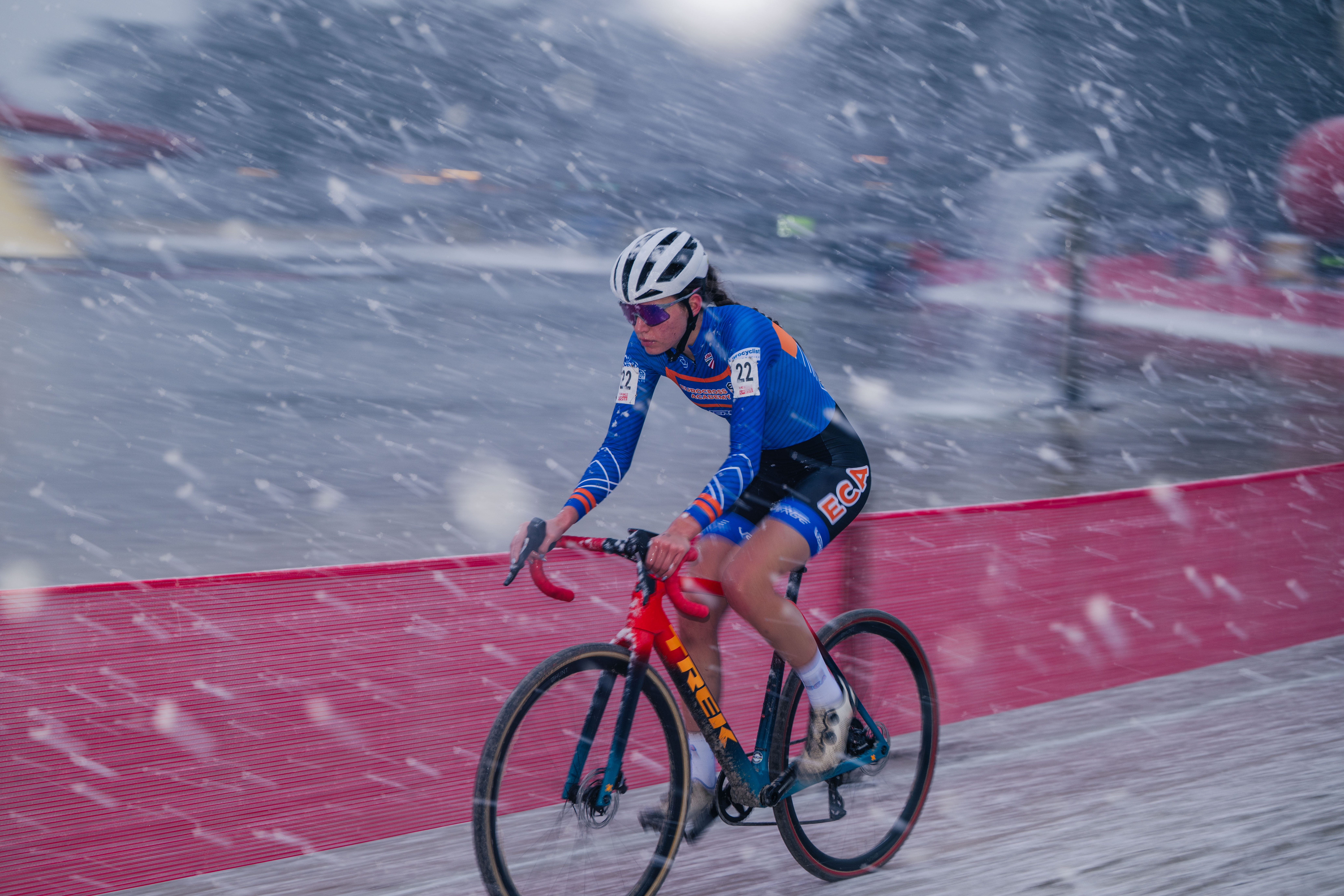
Mol now opens the christmas period - AcrowPhotography
Lokeren returns to the Exact Cross Series on the 21st of November, replacing Kortrijk. The Urban Cross made a final attempt with a new date last winter but was unable to turn a profit on their event. The race isn’t expected to return to the calendar.
Mol, on the 17th of December, is the first race of the Christmas period but could still be too close to training camps in Spain to really draw a strong startlist. Maldegem and Sint-Niklaas end the series after the World Championships.
“Is It Still Worth Investing?” Guerciotti Questions Federation After Worlds Gamble Backfires
In our preview to the World Championships, we noted that the Italian Federation’s “Medals or Nothing” selection policy was a high-stakes gamble. By leaving consistent World Cup performers at home to bet everything on a few stars, they left themselves with no safety net. Following a weekend in Hulst where misfortune hampered the Italian squad, Team Manager Alessandro Guerciotti gave an explosive interview to RAI, questioning whether the Federation’s ambition matches the private investment keeping the sport alive.
Article by Issam Er-Rabhi
Stefano Viezzi - BeyondHorizonMedia
Just a week before the World Championships, Alessandro Guerciotti shared a message that felt almost prophetic. “We are doing something truly extraordinary,” he posted on Instagram, celebrating their Junior World Cup victory with Patrik Pezzo Rosola. He highlighted the “hard work coordinated between staff, technicians, and mechanics” to bring the athletes to the World Championship appointment in the best possible condition. “Now we cross our fingers,” he wrote, “because in life, in work, and in sport, you always need a small dose of luck.”
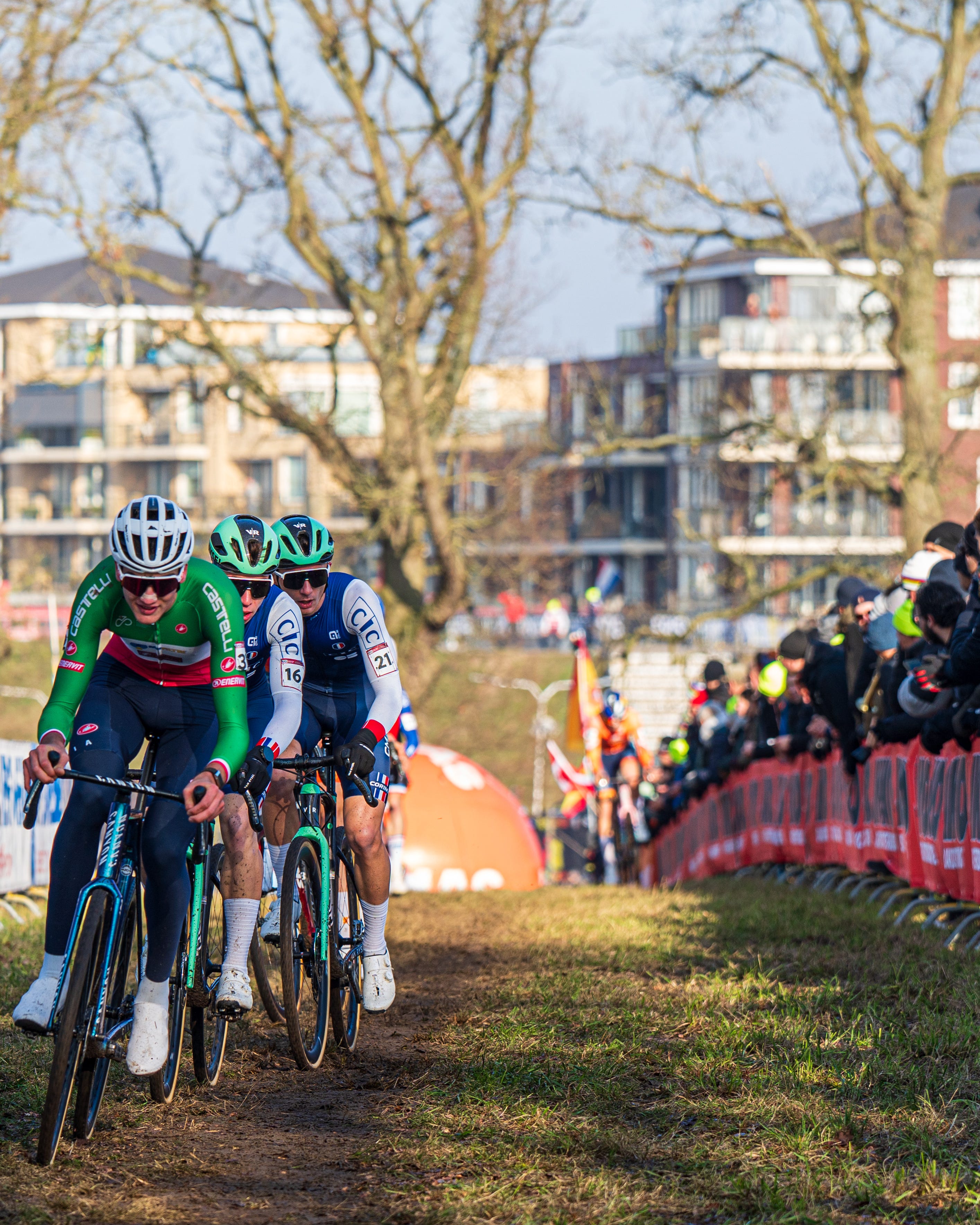
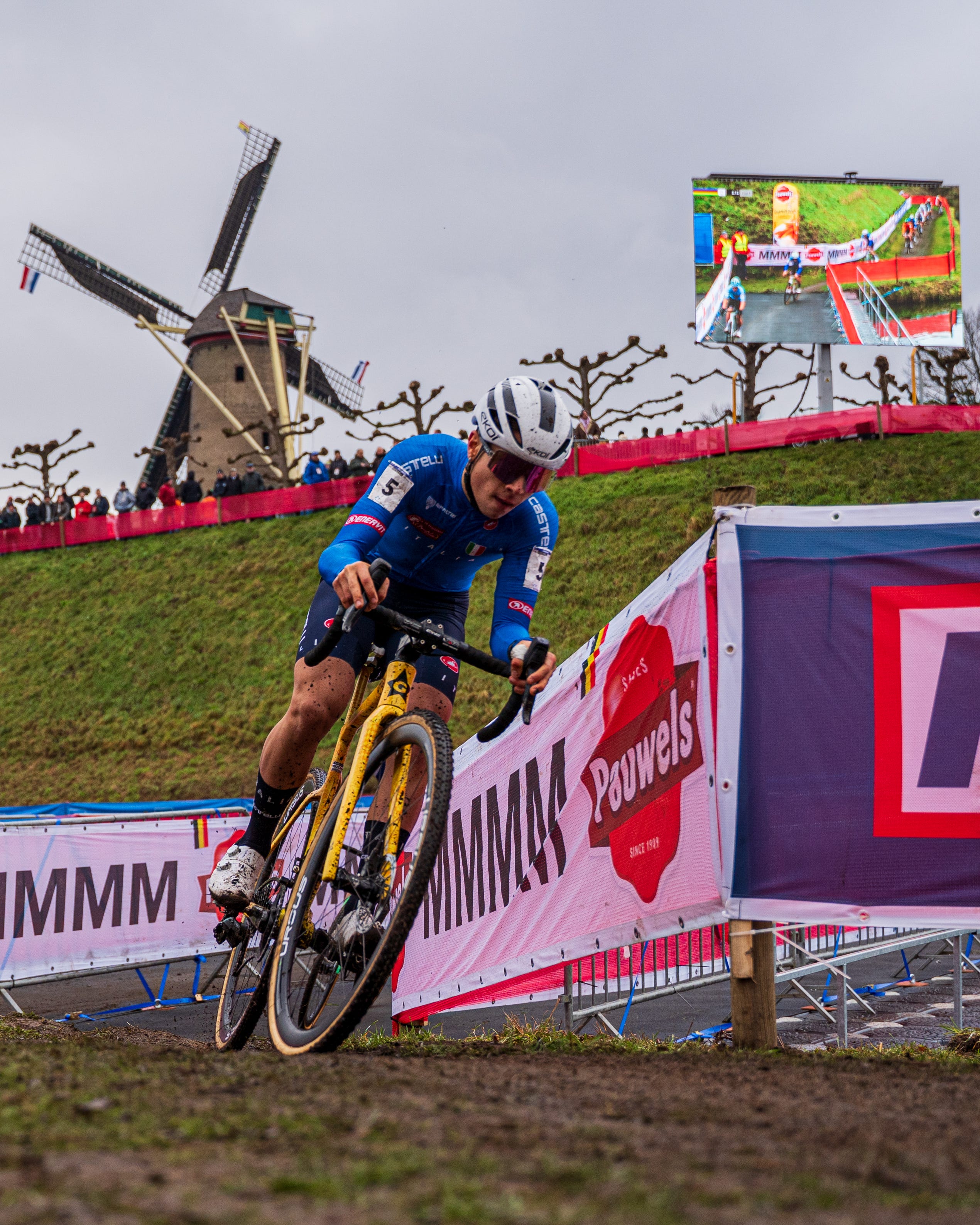
In Hulst, that luck ran out, not just for Rosola, but for the entire Italian squad. In the Junior races, Rosola suffered an off-day and Giorgia Pellizotti narrowly missed the podium. In the Elite Women’s race, medal hope Sara Casasola was forced to abandon due to an injury sustained in a crash at Hoogerheide. And in the U23 Men’s race, Stefano Viezzi rolled a tubular, falling out of contention before eventually being disqualified for an illegal bike change. When you only bring the winners, and the winners have bad luck, you are left with an empty results sheet.
This reality triggered a constructive but furious response from Alessandro Guerciotti, team manager of the historic Fas Airport Services-Guerciotti-Premac team. He questioned the viability of a system that relies on private teams to develop talent, only for the Federation to leave some of that talent at home. “Sometimes I ask myself if it is worth continuing activity with a cyclocross team that requires significant investments,” Guerciotti stated in a TV interview. “In recent years, my team has achieved significant results, but the Italian Federation has not traveled at our pace.”
Pezzo Rosola in Hulst - BeyondHorizonMedia
Guerciotti’s frustration stems from the Federation’s “technical decision” to exclude riders who can’t contend for a medal. He argued that this logic is fundamentally flawed, noting that if every nation reasoned like the Italian Federation, fields would be empty. “You know Van der Poel is going to win,” he said. “But if everyone reasoned like the Italians, maybe ten people would start. Even Filippo Fontana wouldn’t be fielded, because while he rode a great race, you knew he was never going to win or finish on the podium in that field.”
“But let me premise that I don't want to question those who were selected, because everyone who was called up certainly deserved to be,” Guerciotti continues. “My only outburst, which isn’t just the outburst of a team manager but of the entire movement, is that surely there could have been more riders selected. There are riders, not just from my team, that are achieving top 10s, top 15s at World Cups, which is not such an easy thing to do.”
“Let me be clear that I don’t want to replace the coach, Daniele Pontoni has done great work. I want to open the discussion about the selection, because we need more elites at the start,” Guerciotti explained about his interview, as he pointed to specific exclusions like Filippo Fontana and Lucia Bramati as missed opportunities for the federation.
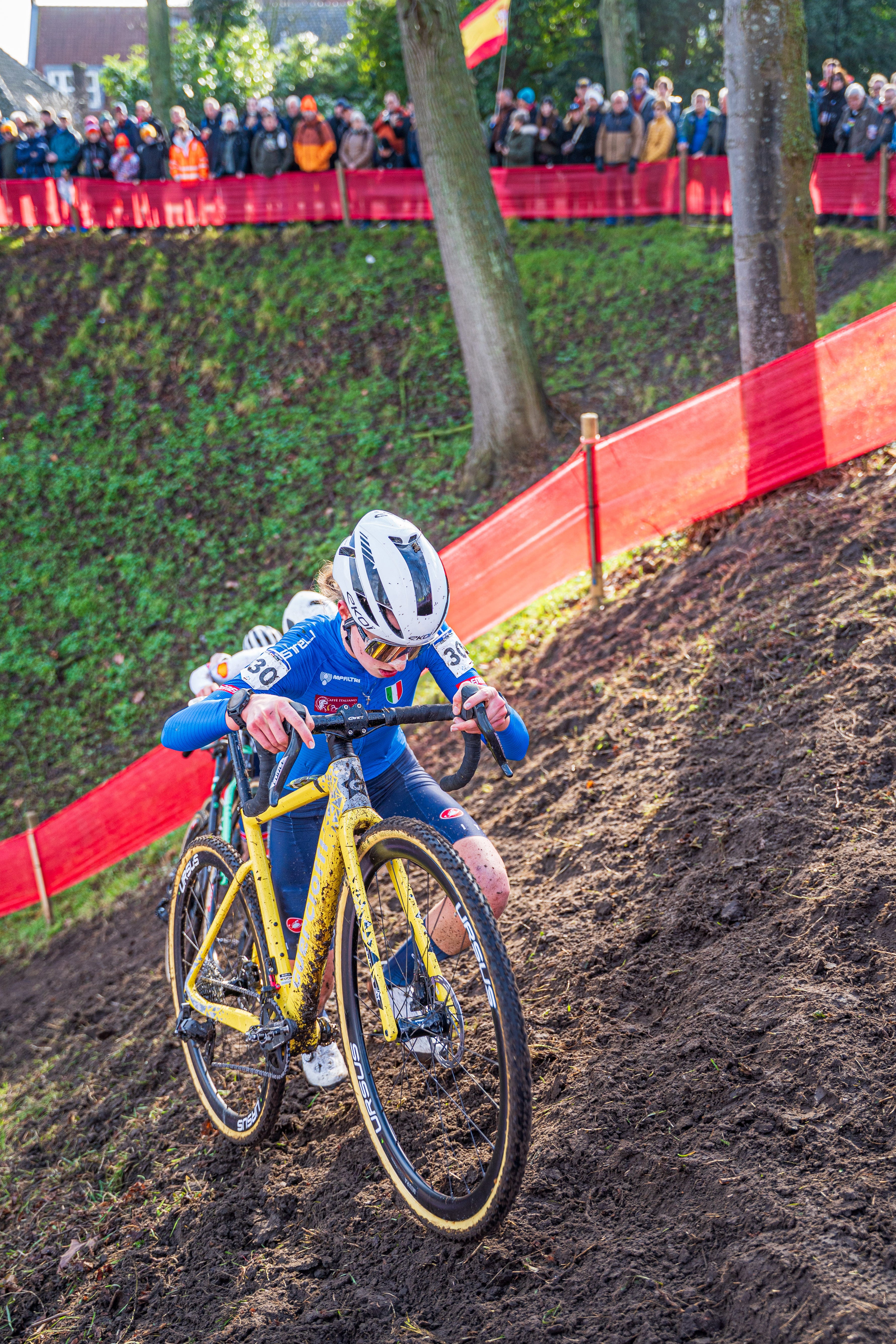
“We don’t have six riders at the elite level ready to race, but we could have had four. Filippe Agostinacchio, Frederico Ceolin, and Gioele Bertolini surely could have been called up. And in the women’s, besides Casasola who we all know wasn’t in optimal physical condition, Rebecca Gariboldi, Lucia Bramati, and Carlotta Borrello.”
“Two exclusions really stand out for me. Lucia Bramati, who is a first-year Elite anyway, is 11th in the World Cup standings and inside the top 30 of the ranking. Then Filippo Agostinacchio, also a first-year Elite. Let’s not forget, he finished second at the European championships last year and won two Italian titles. These are two young kids that we need to give experience to.”
Guerciotti places emphasis on those riders, because he warned that a career doesn’t end at 18 or 23. “Even Filippo Fontana didn’t immediately finish fifth in his first Elite year. Before that, he maybe finished 20th, 15th. Taking more riders brings purpose to a riders season, but can also give you really good results. I remember that in 2008 we took sixth place at the Treviso Worlds with Marco Aurelio Fontana, it was his first big result. He had never finished in the top 10 of the World Cup, but always in the top 20. With this selection logic, we would never have achieved that. Back then, he benefitted from racing the World Championships already in 2007.”
Filippo Grigolini - BeyondHorizonMedia
But the criticism of Guerciotti isn’t limited to his own riders, or first year elites. “Gariboldi, yes we can consider her old, which she actually isn’t. But come on, if a woman goes fast in a season, whether she is 30 or 35, she must still be at the start of a World Championship. Both to honor the Azzurra jersey, but also because it’s so important for cyclocross teams in Italy.”
